16.06.2025
From Tolstoy to Lukyanenko: What the Doctor-Scientist Reads
Candidate of Medical Sciences Elena Kaverina talks about the books that shaped her worldview, her love for Tolstoy and medicine
Elena Valerievna Kaverina is a candidate of medical sciences, associate professor of the Department of Public Health, Healthcare and Hygiene of the RUDN Medical Institute, head of the PSO "Healthcare Organizers and Leaders" and the Council of People's Commissars of the same name.
I learned to read at the age of 4 and loved it so much that I brought a book of Pushkin's fairy tales to kindergarten and read them out loud to everyone. As a result, my parents sent me to school a year earlier, at the age of 6, with 7-year-olds. Reading was one of my favorite hobbies, as was the case with my entire family, and bookstores were my favorites. My parents still have a huge library at home.
I graduated from RUDN several times - twice from the Faculty of Medicine - first with a degree in General Medicine, then with a degree in Pharmacy, and I have several medical specialties. I really love books about doctors, medicine - fiction and biographies, complex (for specialists) and popular science. And also about the history of medicine, about scientists and the development of science.
- Yuri German – trilogy “The Cause You Serve”, “My Dear Man”, “I Am Responsible for Everything”
The trilogy that I read back in school and that inspired me to become a doctor is still one of my favorite works. The books tell about Vladimir Ustimenko, a surgeon, his life path from school years, then during the war and post-war years, about medicine, profession, about sometimes difficult choices. About the cause you serve. It is a fascinating read, I recommend it to young people!
2. Lev Nikolaevich Tolstoy - “War and Peace”, “Anna Karenina”, etc.
Books reread as adults reveal a completely different side. If at school you pay more attention to the plot (which is sometimes as good as a TV series), then over time you begin to notice how amazingly Tolstoy was able to convey the era and characters, the mood and historical context. You can read many times and each time discover something new. In addition, I was born in Tula, Yasnaya Polyana (L.N. Tolstoy's estate) is one of my favorite places, so it seems to me that Tolstoy has always been with me. Every year, Yasnaya Polyana hosts the Tolstoy Festival, where theaters from all over the country bring productions of Leo Nikolayevich's works and perform them in the scenery of the estate. After all, many of Tolstoy's works were taken from the surrounding environment and people around. And every year I try to attend performances.
3. Veniamin Kaverin – “Open Book”
Of course, I couldn't help but read the books of my namesake. A book about a female microbiologist, her fate from her youth to great scientific achievements. The prototype of the main character was Zinaida Ermolyeva, known as "Mrs. Penicillin", who delighted even foreign scientists. Although the book is fiction, it is very realistic, because Veniamin Kaverin is the brother of Zinaida Ermolyeva's husband.
4. Mikhail Bulgakov - "Notes of a Young Doctor"
If you are a medical school graduate or a young resident, you will say that this book is about you. Dramatic and sometimes ironic stories about what a doctor faces when he has just graduated from medical school and finds himself in a rural area, where you are left alone with patients.
5. Fedor Uglov – “The Surgeon’s Heart”
A book by a remarkable surgeon who lived to be 103 and operated until he was 100! "The Heart of a Surgeon" is an autobiographical book about his path in medicine, patients, operations and experiences.
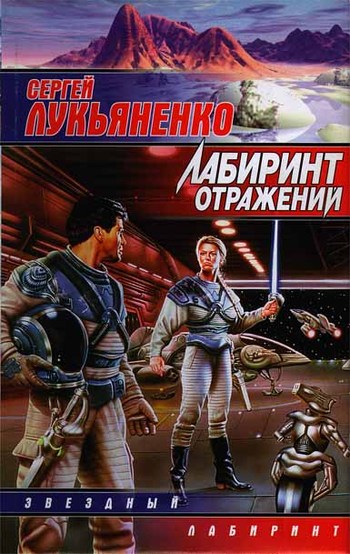
6. Sergey Lukyanenko - "Labyrinth of Reflections", "False Mirrors", "Transparent Stained Glass"
Written almost 30 years ago, it is more relevant now than ever. A trilogy about virtual reality and how people “disappear” in it, becoming dependent on the virtual world. It used to read like science fiction – but now it is quite a reality. Lukyanenko has a lot of good works in general.
Of course, it is worth mentioning the Strugatsky brothers, Stanislav Lem - you can read everything there.
"The Surgeon's Heart" by Uglov, "White Clothes" by Dudintsev, "Doctor's Notes" by Veresaev, Chekhov's stories - these are also must-reads.
In general, I believe that it is very important for every person to read books on history, art and philosophy - they form critical thinking. And, of course, classics and fiction for the development of imaginative thinking.
To participate in the TOP-5 BOOKS section, send applications to ayibova-ev@rudn.ru — Your Academic Cat