25.11.2024
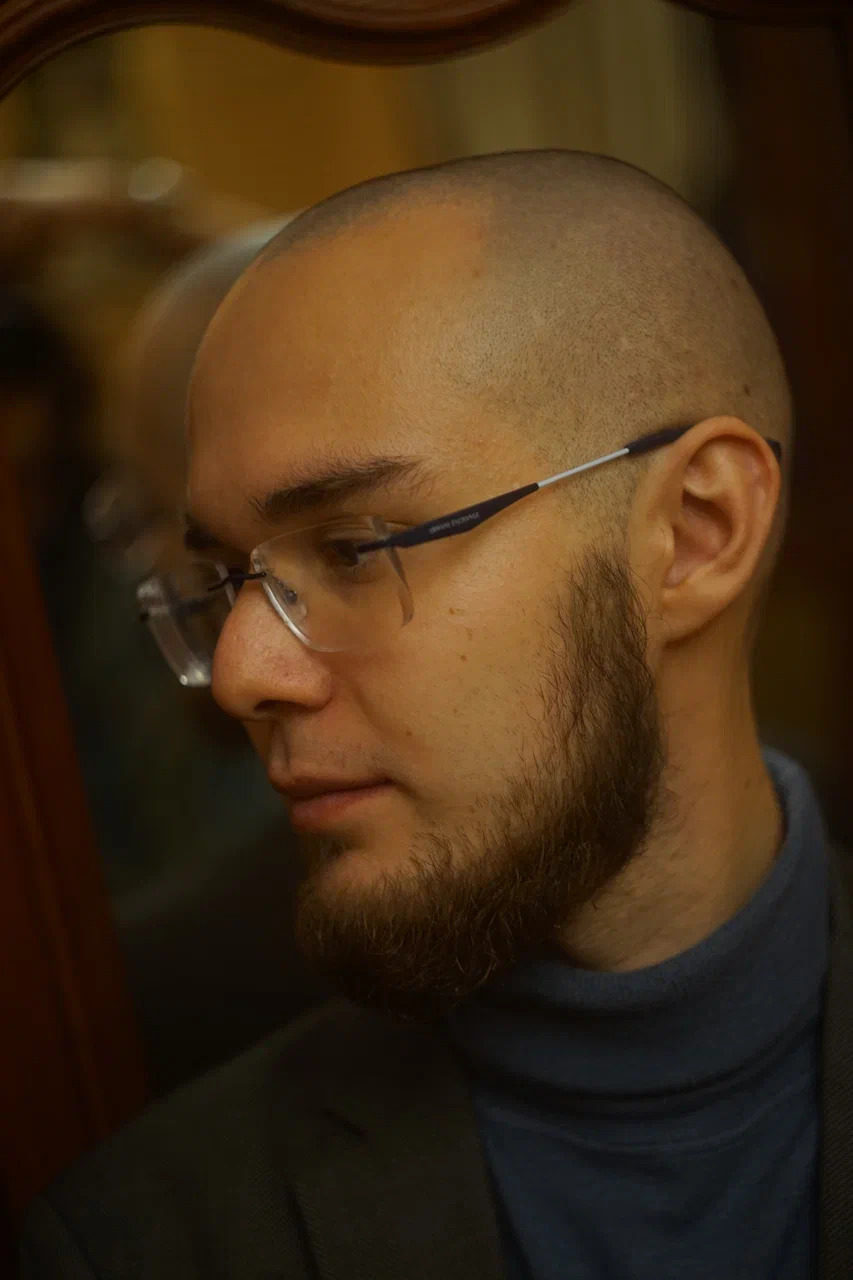
Rodion Shafikov: A Journey to Poetic Mastery
Rodion Shafikov, the winner of the Fifth RUDN Poetry Tournament, shares his experiences in poetry, discusses competitions, and offers advice to aspiring poets.
 |
How long have you been writing poetry?
What themes and motifs dominate your work? In my work, historical and cultural themes are most prominent. Biblical narratives hold an important place, largely because my academic specialization is biblical studies and religious philosophy. I have also accumulated quite a few poetic portraits of great philosophers in my writings. This doesn’t mean I don’t write about the surrounding reality. Perhaps I would even like to delve deeper into the world around me. Nevertheless, working with plots from world culture brings me much inner satisfaction and delights me with the results I achieve. Tell us about your experience participating in the RUDN Poetry Tournament. I have participated in all the RUDN Poetry Tournaments since Maxim Gennadyevich Markevich took on the task of reviving - and successfully did so - their tradition. In 2021, I became the winner of the first poetry tournament, and now I have managed to repeat this achievement. The poetry tournaments have always been a joyful celebration, and I have grown quite fond of them. The question of whether I would apply this time has long ceased to exist for me. At the tournaments, I met many interesting creative individuals who have become dear friends, as well as established contemporary poets whom I now consider my mentors. |
What was the most challenging and interesting aspect of the tournament for you?I enjoy reading poetry publicly, but I still find it challenging to participate in poetry competitions. Competitive performances always differ and require additional skills. Besides writing strong texts, one must possess a great deal of artistry and good diction in a competition. I still noticeably lack this, so I have to think a lot about my performance program - the stakes for the poems themselves become higher. This is part of what makes it interesting: I value the opportunity to present my texts to the audience and the jury, to test whether I can achieve the artistic effect I intended in my poems. It is also fascinating to listen to other participants, to interact with them, and to discuss each other's poetry - this is a natural and important part of literary life. How do you assess the level of the tournament participants? The level of the tournament participants is quite high. I noticed many things in my competitors that I could learn from them. They choose interesting plots and find creative solutions for them. Many of the participants are excellent on stage and capture the audience's attention, writing good poetry and performing it well. I was perhaps a bit disappointed not to see some familiar faces from past tournaments, but all the participants I met this time were outstanding and had many strong qualities. What advice would you give to aspiring poets? The main and probably the only piece of advice I can give is: do not be afraid to perform your poems, do it as often as possible. Performances in front of an audience that is not inherently supportive, such as unfamiliar crowds or, again, a competition jury, are especially valuable. The encounter of creativity with an audience provides the most useful lessons: the audience's reaction helps to understand what works and what doesn’t in the poems and performances, and the words of more experienced and established poets provide direction for further work, including addressing one’s mistakes. I have learned many lessons from my performances, and I took away some insights from the current tournament based on what the jury members told me. Do you have any idols among contemporary poets? I have the fortune of being acquainted with some contemporary poets, and I fear that my response to this question might turn into a long list of well-deserved acknowledgments to my mentors and senior colleagues. For now, I will note that the presence of Nikolai Valeryevich Kalinichenko on the jury meant a lot to me in this tournament. I greatly admire his poems and the way he performs them. Some of his works, like "The Seminarist" or "Hope," I can almost recite by heart. Nikolai Valeryevich has judged my performances before, always doing so with rigor and fairness. His comments invariably become creative challenges for me: to overcome one aspect of myself and learn another. I believe his opinion is one of the most authoritative for me when it comes to poetry. Do you plan to continue writing poetry after graduating from university? Yes, I do plan to, and in fact, I can no longer imagine myself stopping writing. It has become a part of my life, supported by the very circumstances of my existence - it seems as if a corresponding framework has been built that sustains the continuation of my creativity, providing support and new strength for new achievements. What are your future plans in literature and poetry? Essentially, my plans are to continue my creative work as it unfolds. This means working on my craft, participating in poetry events, and getting to know my fellow writers. What I might dream of is having my own solo poetry evening and publishing a collection of poems, but these are all matters of time and honest labor. I am confident that in due time, everything will come to fruition! |
|