07.03.2025
Top 5 books by Anna Kurbatova
In anticipation of March 8, Anna Kurbatova, associate professor of the Department of Environmental Safety and Product Quality Management at the Institute of Ecology, recommends books that inspire
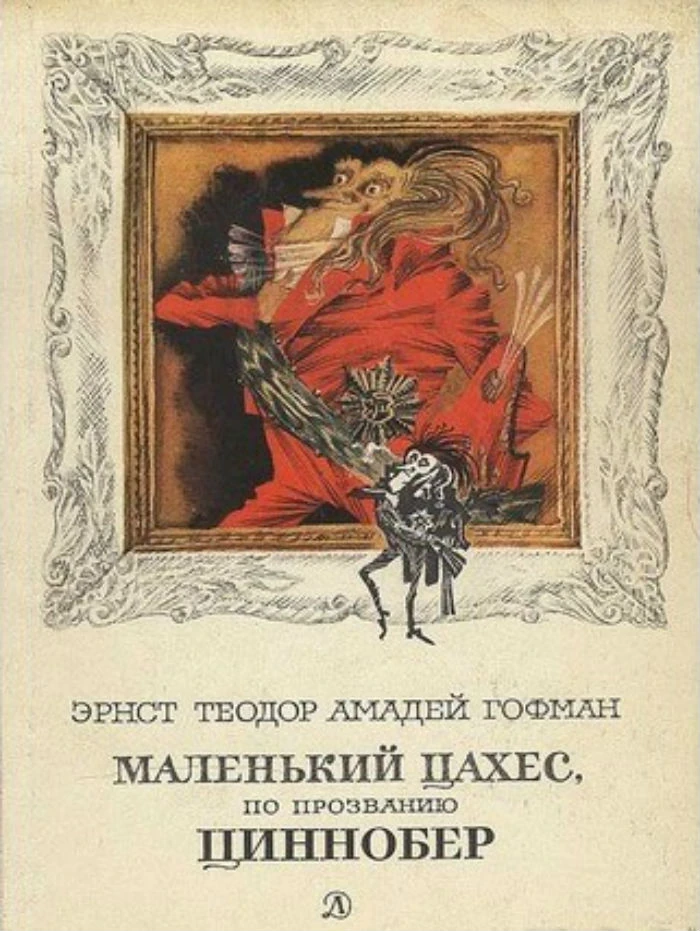
1. Hoffman E. T. A., "Little Tsakhes, nicknamed Zinnober"
The fairy tale by the great Hoffmann "Little Zaches, nicknamed Zinnober" was written in 1819. The main idea of the work was a satirical depiction of the social world order in Germany at the beginning of the 19th century and ridicule of individual vices characteristic of all mankind. The fairy tale by the German writer describes the phenomenon of Zaches (the name of the main character), the hero of which, the dwarf Zaches, with the help of witchcraft was able to take a socially invulnerable position, guaranteeing him the "authorship" of all the good deeds occurring in society and irresponsibility for the atrocities he committed himself, which were not associated with his name and responsibility for which was placed on other, completely innocent people. The phenomenon of Zaches is the ability of an individual to achieve the readiness of others, to attribute to him all the merits, successes, achievements of others, and to shift all the consequences of his own failures, mistakes, blunders and even real crimes onto them. How many Zacheses are in the world around us!
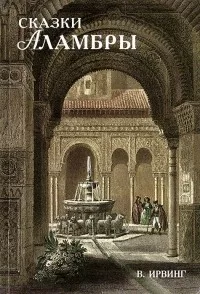
2. Washington Irving, "Tales of the Alhambra"
Magnificent stories reflecting the period of the Arab Caliphate in Spain. In the south of sunny Spain stands the ancient city of Granada, and above it rises the Alhambra - the famous fortress-palace, erected during the times when these lands were under Arab rule. The majestic royal chambers, decorated with carved ornaments and marble mosaics, graceful fountains and gardens of the Alhambra have attracted romantics and history buffs from all over the world for centuries, including the famous American writer of the 19th century Washington Irving. I bought it in a bookstore in the Alhambra in March 2019, when I was lecturing at the University of Granada, in an amazing city that is forever imprinted in my heart.
3. Lewis Carroll, "Alice in Wonderland"
I always advise students to read (who haven't read it) or reread again the famous "Alice in Wonderland" by the writer and mathematician Lewis Carroll. The Red Queen's Principle: "To stay in place, you have to run as fast as you can. To move forward, you have to run twice as fast." The evolution of ecosystems in ecology is subject to the Red Queen Hypothesis - an idea in evolutionary biology proposed in 1973 by Lee Van Valen. It states that in the struggle for survival in a world that is constantly changing due to the evolution of other species, each organism must constantly evolve to remain at the same level of competition. In other words, to stay in place, you must constantly move forward.
4. Daphne du Maurier, "Rebecca"
I read it in two days, back in early 2000. But… Some books come to you later… as the years go by. Their true meaning eludes you, so well hidden is it. A true psychology manual revealing the terrifying techniques of manipulation, toxic communication, and human vices. Winner of the National Book Award for Best Novel in 1938, Rebecca has been adapted many times, including Alfred Hitchcock’s 1940 film version, which won an Oscar for Best Picture, and a 1997 television miniseries. Rebecca tells the story of an unnamed young woman who marries the wealthy owner of the magnificent English estate of Manderley and becomes obsessed with the memories of her husband’s first wife, the titular heroine. The book functions as a psychological thriller, a romance novel, and a gothic novel.

And in conclusion, I would really like not to advise, but to tell you what I am reading now.
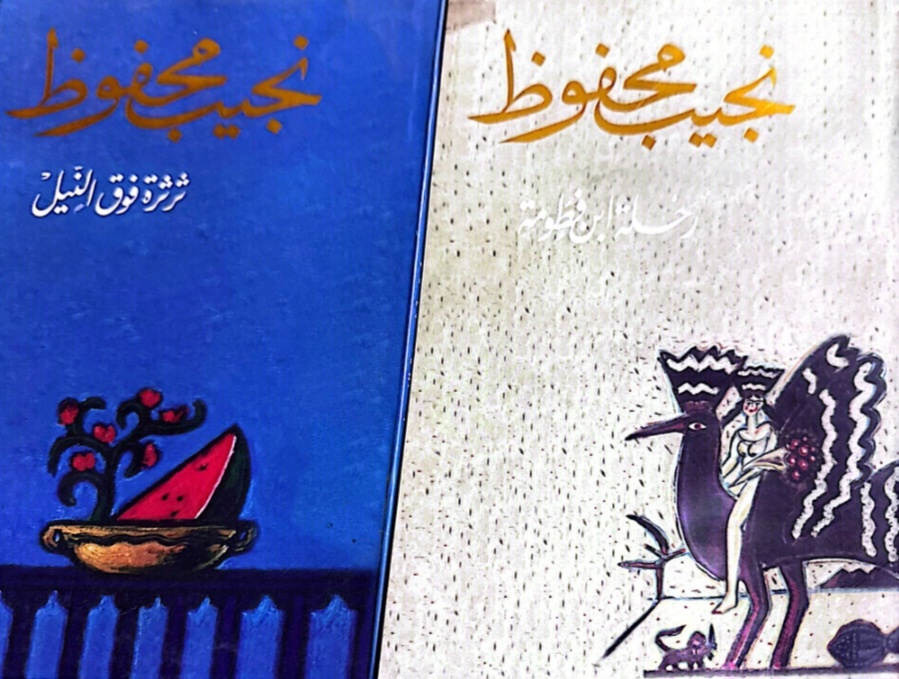
5. Naguib Mahfouz, "The Journey of Ibn Fattuma"
Naguib Mahfouz (1911-2006, Cairo), the first Arab writer to win the Nobel Prize in Literature in 1988 "for the realism and richness of the Arabic narrative, which has significance for all mankind," in his masterpiece, The Cairo Trilogy. Naguib Mahfouz said about himself that he is the son of two civilizations that happily united: one, seven thousand years old, was born in the era of the pharaohs, the other, Muslim, one thousand four hundred years ago. It was fate that he was born there, was fed with their milk, grew up on their cultural heritage. On this soil his books were created, and which, fortunately, we can read now.
To participate in the TOP-5 BOOKS section, send applications to ayibova-ev@rudn.ru — Your Academic Cat